
*This post may contain affiliate links for which I earn commissions.*
💡 The Precision of Atomic Clocks
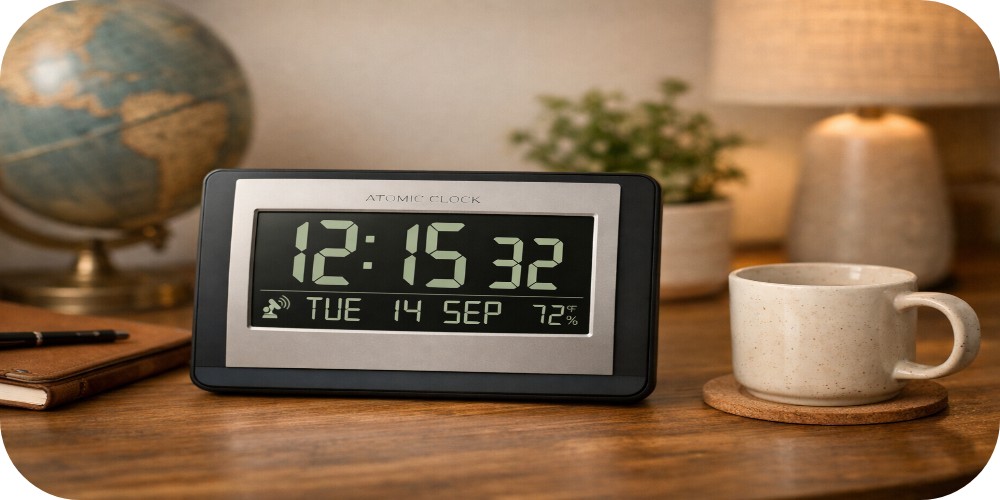
Atomic clocks are known for their extraordinary accuracy, often considered the most precise timekeeping devices available today. Unlike traditional clocks, which can drift over time, atomic clocks rely on the vibrations of atoms to measure time, making them incredibly reliable. These clocks are used in everything from GPS systems to scientific research, where precision is critical.
How Do Atomic Clocks Work?
Atomic clocks function based on the natural vibrations of atoms, typically cesium or rubidium. The principle is that atoms oscillate at a consistent frequency, and by counting these oscillations, atomic clocks can measure time to a very high degree of accuracy. For example, cesium-based atomic clocks are so precise that they lose only about one second every 100 million years! 🌍🧬
Accuracy and Applications
The unmatched accuracy of atomic clocks makes them essential in several fields. They’re used to synchronize satellite systems, ensuring that GPS locations are pinpoint accurate. They’re also crucial in telecommunications and scientific experiments where precise timekeeping is necessary. Atomic clocks help with everything from internet data transmission to measuring the Earth’s rotation and gravitational field. ⛰️📡
Why Do We Need Such Precision?
Atomic clocks are not just for science fiction; their precision impacts everyday life. The accuracy provided by atomic clocks enables seamless global communication, precise navigation, and synchronization of financial transactions across time zones. Without these clocks, many of the technologies we rely on today wouldn’t work properly. 🕰️💻💡
💡 Conclusion: The Future of Atomic Clocks
Atomic clocks continue to evolve, with new advancements being made in their accuracy and applications. Future developments could lead to even more precise timekeeping, with the potential to revolutionize areas like quantum computing and space travel. As these clocks become more refined, they’ll play an even greater role in shaping our understanding of time and space. 🌌🚀